Reframing PCOS beyond medical treatment.
Polycystic Ovary Syndrome (PCOS) affects millions of women worldwide, yet managing the condition often extends far beyond medical treatment. Alongside physical symptoms such as irregular periods and hormonal imbalances, many women experience anxiety, low self-esteem and lifestyle challenges that receive limited support within traditional healthcare.
Through secondary research, conversations with women living with PCOS and an evaluation of existing digital health platforms, I explored how fragmented care impacts everyday experiences. The findings highlighted a lack of continuity between diagnosis, education, emotional wellbeing and long-term lifestyle management. This project reframed PCOS not simply as a medical condition, but as a service experience involving multiple stakeholders. Bloom was conceived as a holistic support ecosystem that complements clinical care by combining education, wellbeing tools, community support and personalised guidance into a connected, human-centred experience.
Fragmented care leaves women unsupported after diagnosis.
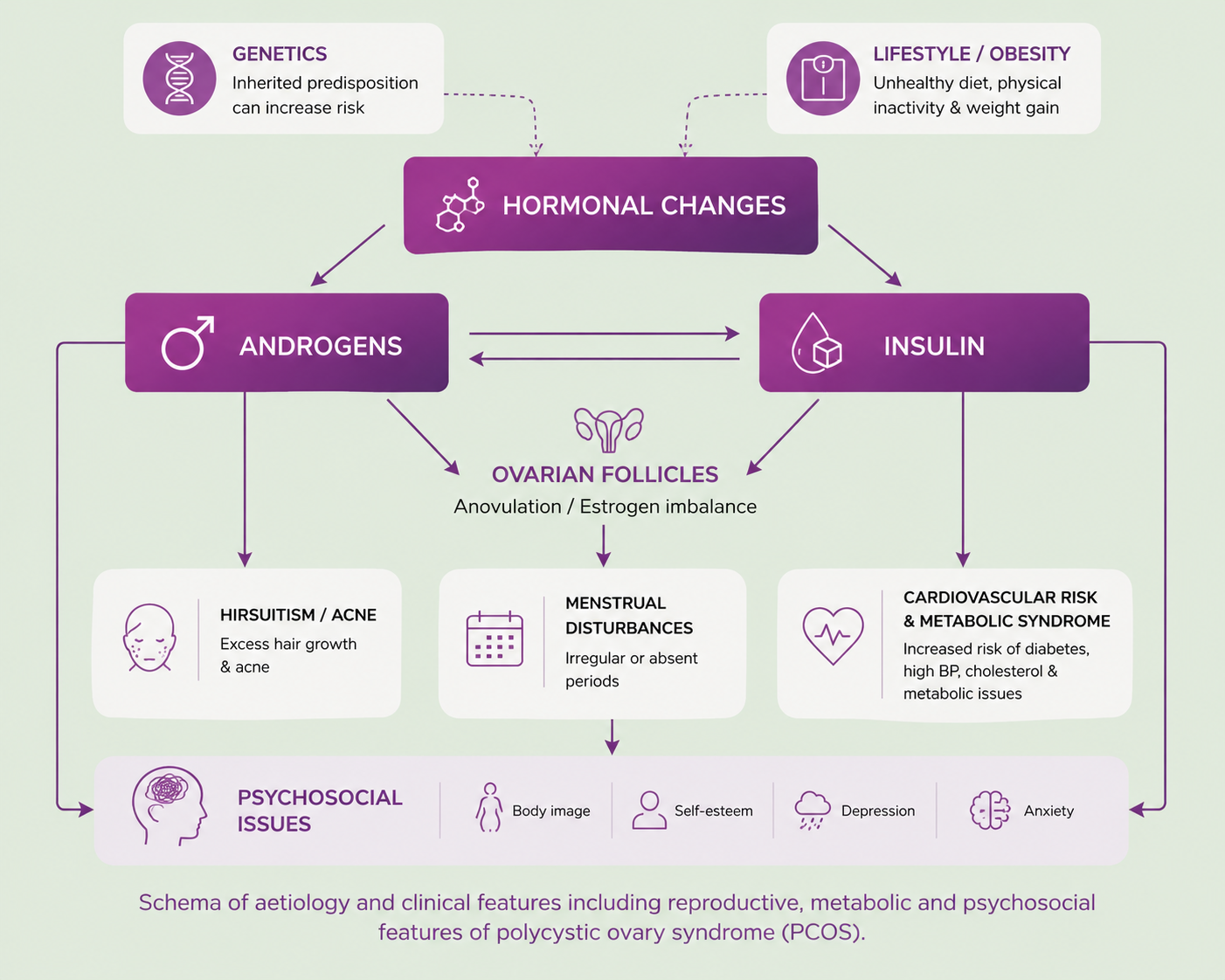
Women diagnosed with PCOS often leave medical appointments with limited guidance on managing the condition beyond medication. While healthcare primarily focuses on treating physical symptoms, emotional wellbeing, lifestyle changes and ongoing support are frequently overlooked. Existing health applications tend to address isolated needs such as cycle tracking or fitness, but rarely connect education, mental health and community support into one cohesive experience.
This fragmented journey can leave women feeling overwhelmed, isolated and unsure where to turn for reliable information.
How might we design a connected support ecosystem that empowers women with PCOS to better understand their condition, build sustainable habits and access personalised support throughout their healthcare journey?
A human-centred approach — understand first, design second.
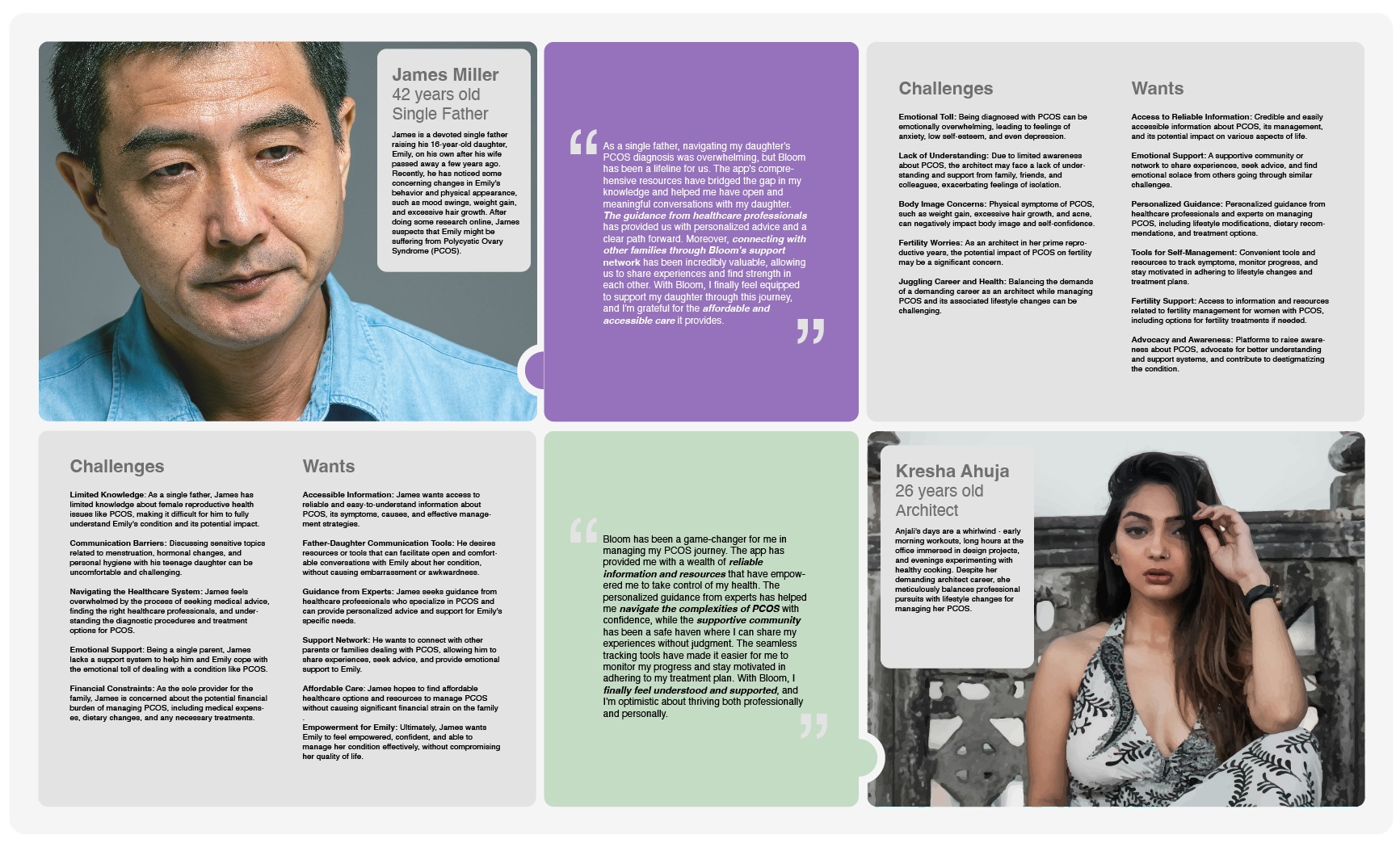
The project followed a human-centred design approach, beginning with understanding the experiences of women living with PCOS before exploring potential solutions. I conducted secondary research to investigate the psychological and behavioural impacts of the condition, alongside conversations with women experiencing PCOS to understand their everyday challenges.
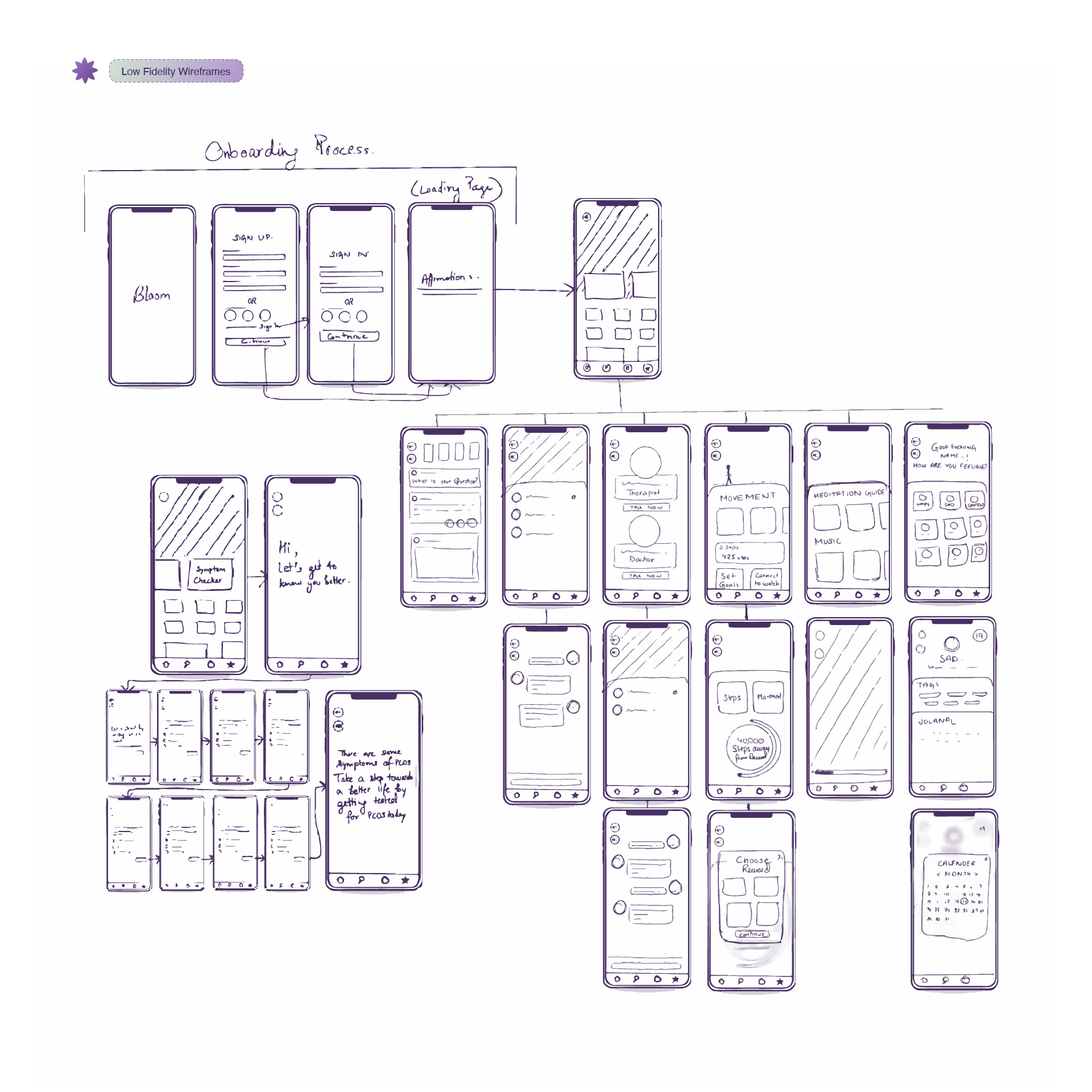
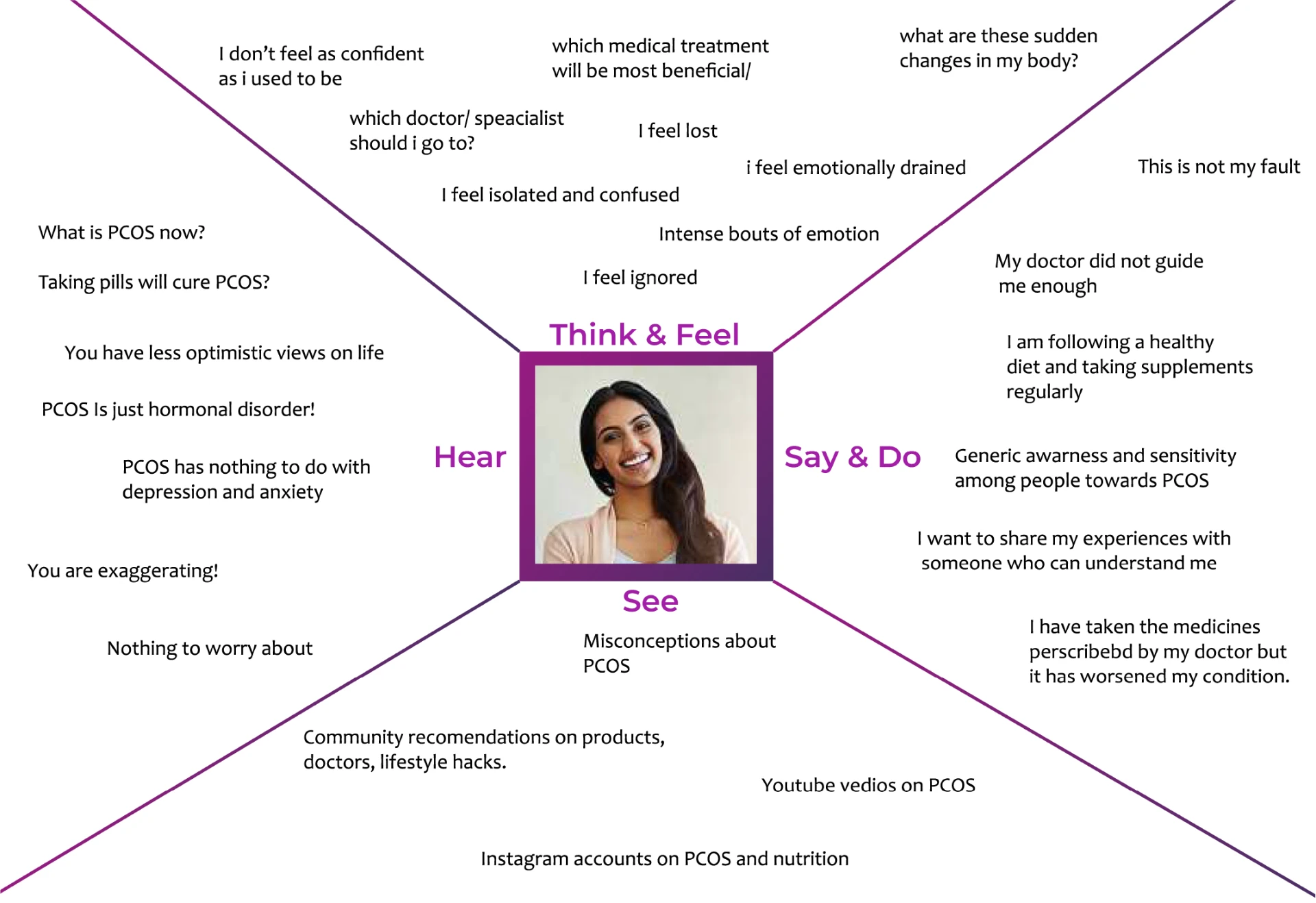
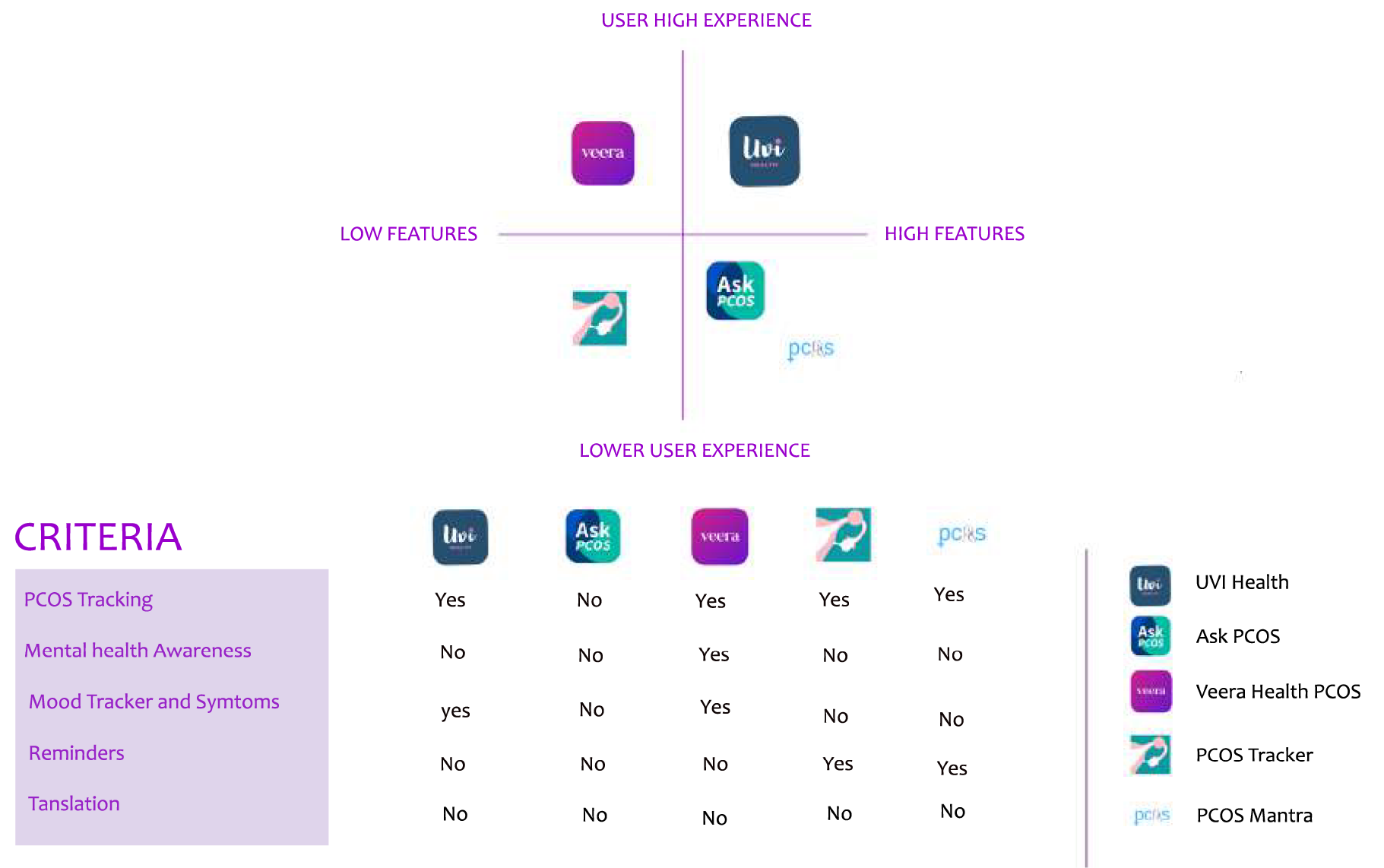
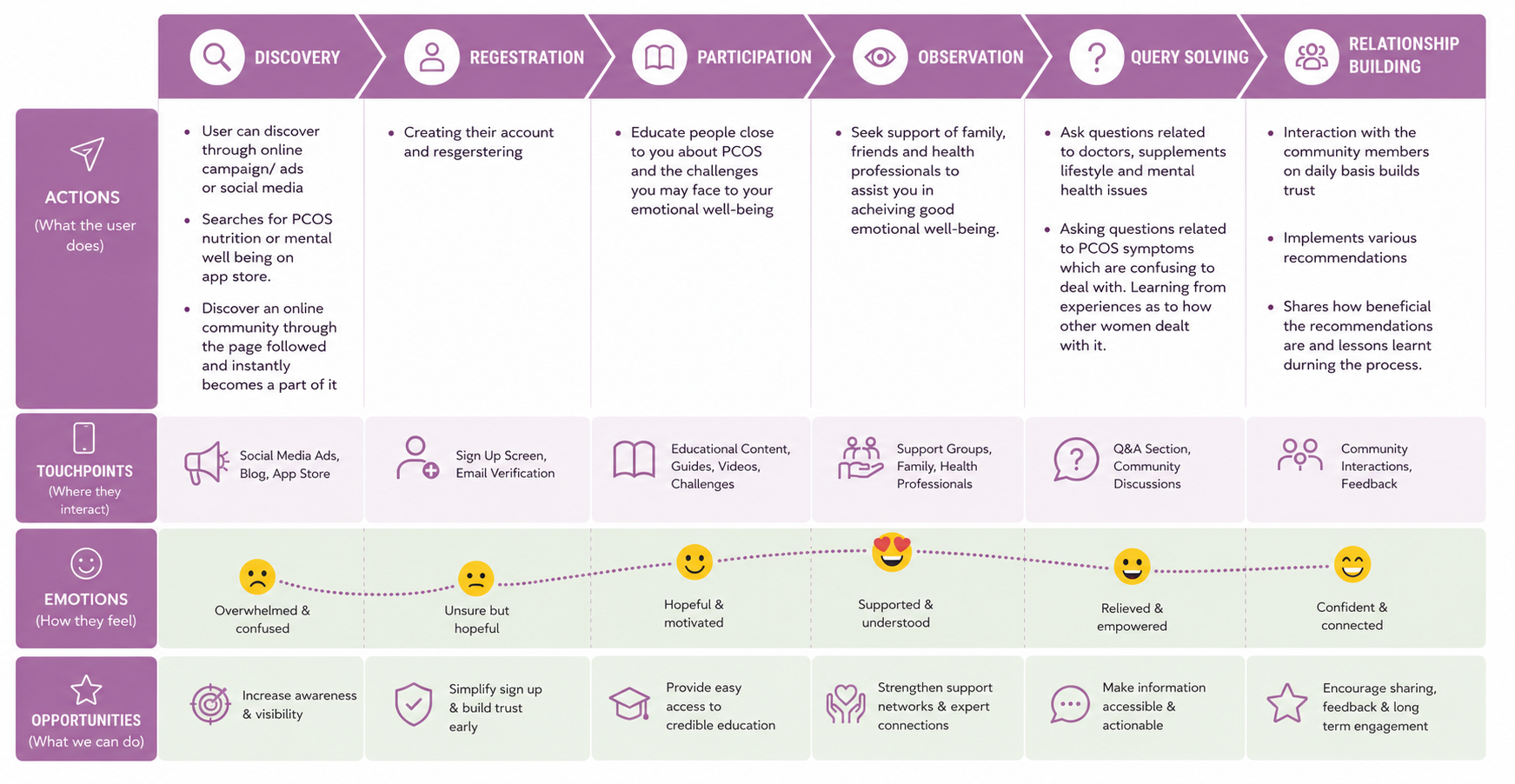
These insights were synthesised using empathy mapping and competitive analysis to identify unmet needs and opportunities for improvement. Rather than designing another symptom-tracking application, the research revealed an opportunity to create a broader support ecosystem connecting healthcare, education, community and self-management. The concept evolved through wireframes, user flows and interface prototypes while considering how multiple touchpoints could work together to create a more continuous and supportive healthcare experience.
Bloom — a service, not just an app.
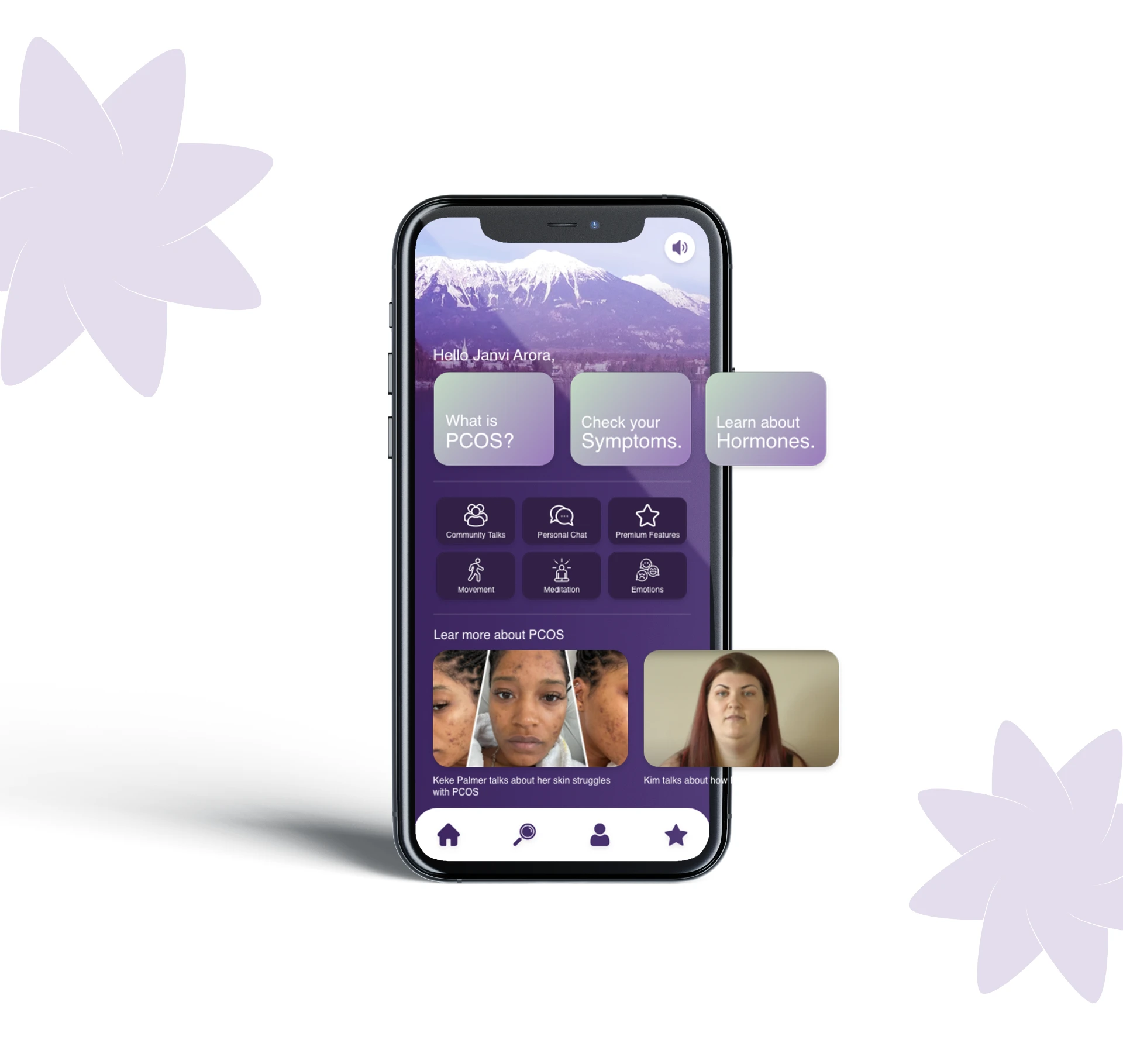
Bloom is a holistic support ecosystem designed to complement existing healthcare by supporting women beyond diagnosis. At its core is a personalised mobile application that combines symptom tracking, mood journaling, lifestyle goals and trusted educational resources within a calm and intuitive experience.
Beyond the app, Bloom extends into a wider service through peer communities, therapy support, expert guidance and the #SHEBlooms awareness campaign, encouraging open conversations around PCOS and reducing stigma. By connecting users with healthcare professionals, wellbeing resources and like-minded communities, the service promotes continuous engagement rather than isolated healthcare interactions. Bloom demonstrates how service design can transform fragmented experiences into a coordinated system that empowers women to manage their health with greater confidence.
Clarity, comfort and continuity in every interaction.
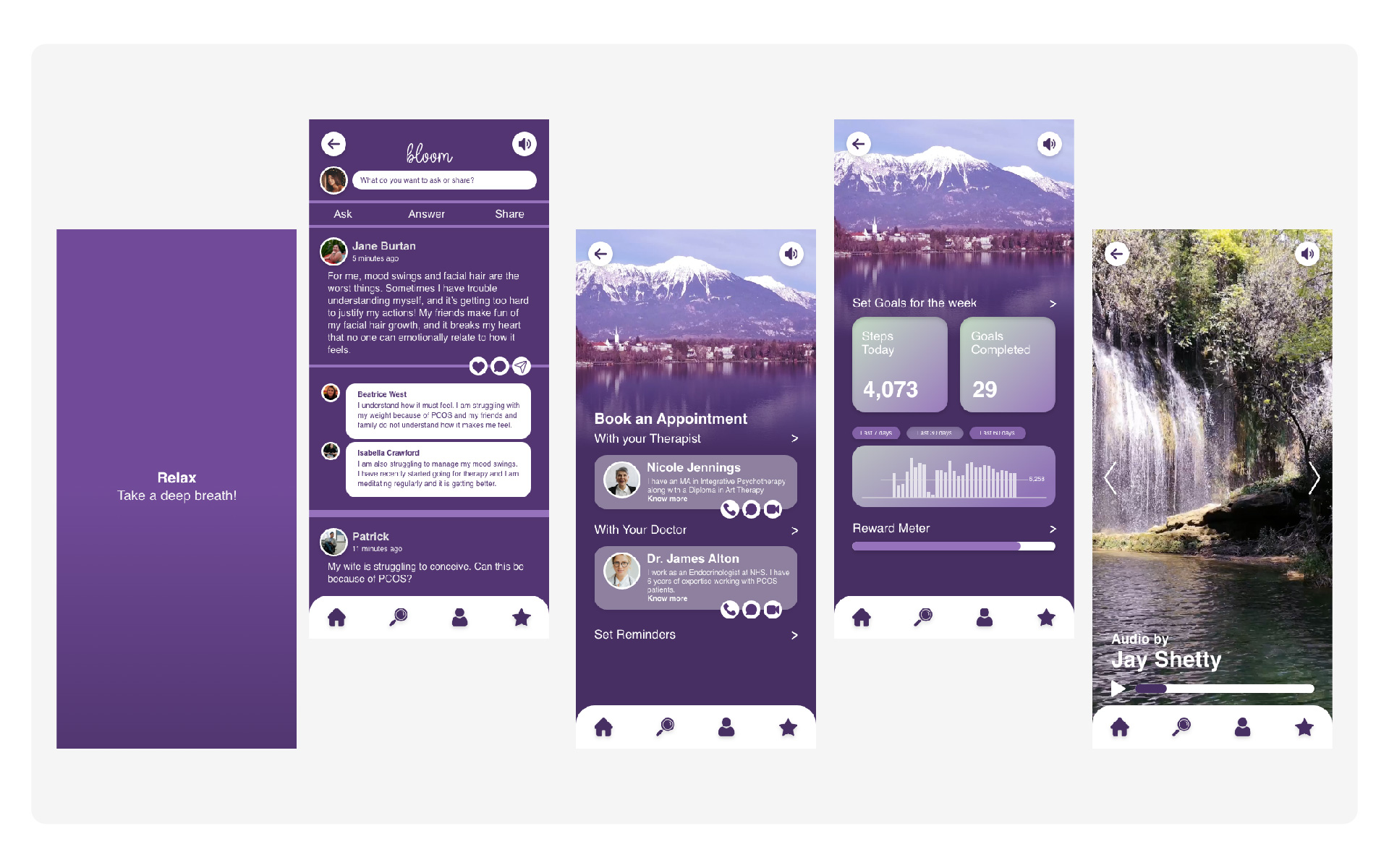
The design of Bloom prioritises clarity, accessibility and emotional comfort. A soft visual language, intuitive navigation and personalised dashboard were developed to reduce cognitive overload and create a reassuring user experience. Key features include symptom and mood tracking, journaling, movement goals, educational content and community support, allowing users to manage different aspects of their wellbeing within a single platform.
Gamified rewards encourage sustainable habit formation, while the interface promotes reflection rather than simply recording health data. Every interaction was designed to reinforce Bloom's broader service vision: supporting women throughout their healthcare journey through connected experiences that balance medical guidance with emotional wellbeing, education and community.